

WETLAND INTERVENTIONS FOR RESILIENCE & RURAL DEVELOPMENT
Competition entry for Ultra Tech India Next – Village 2047.
STATUS : Winning entry – Runner up
TEAM :
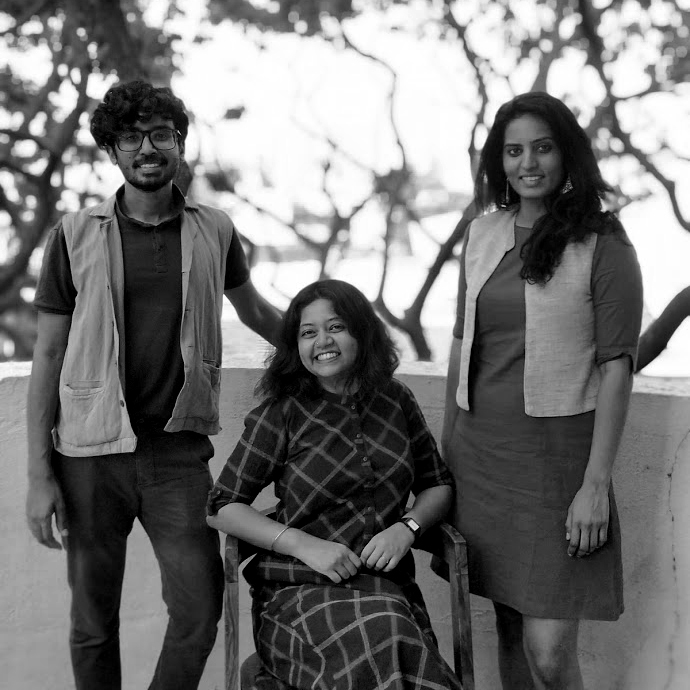
Himanshu Arteev – Permaculturist and Landscape Designer, Ananas
Bhavana Rao – Founder and Principal Architect, Umber Architecture
Nisha Mary Poulose – Regional Planner and Founder, Woven Design Collaborative
.
BRIEF :
At the core of every IndiaNext competition is the desire to take up some of the biggest challenges currently facing the country. At the same time, it also understands that the solutions to these challenges are likely to be too huge for one set of professionals to put together. Hence, the initiative creates a collaborative environment and brings together the best of minds to address them.
The challenge of this competition is to disabuse any perceptions of the rural segment as being in need of deliverance. On the contrary, the idea is to interpret their aspirations, infuse it with world-class design sensibility and create an architectural template that suits the new progressive rural consciousness.
PROPOSAL :


STORY :
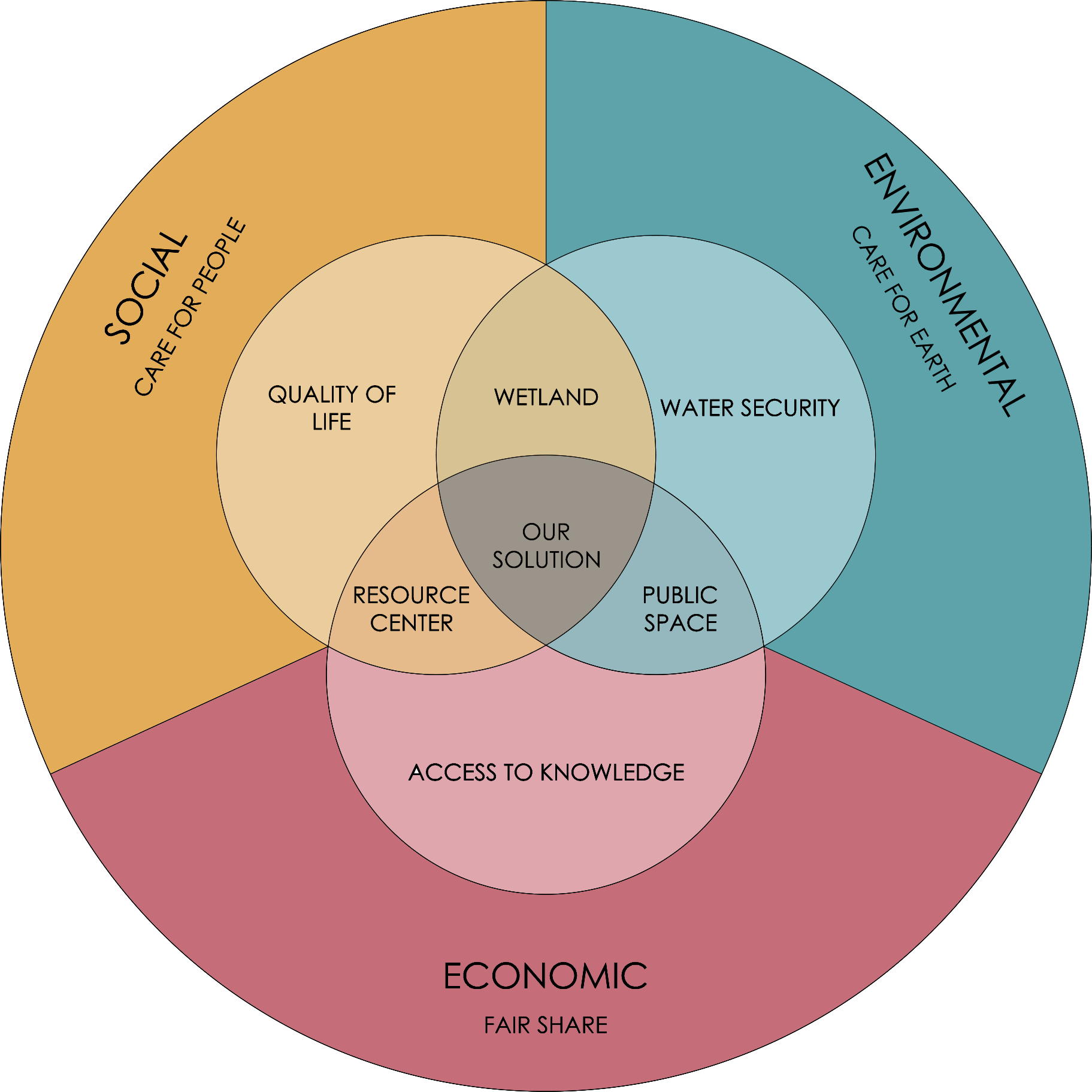
We approached infrastructure and development through the lens of interdisciplinarity. We aimed for a integrated solution that is enmeshed into the contextual landscape – linking community, architecture, landscape and regional planning.
We proposed a threefold solution to arrive at a better quality of life :
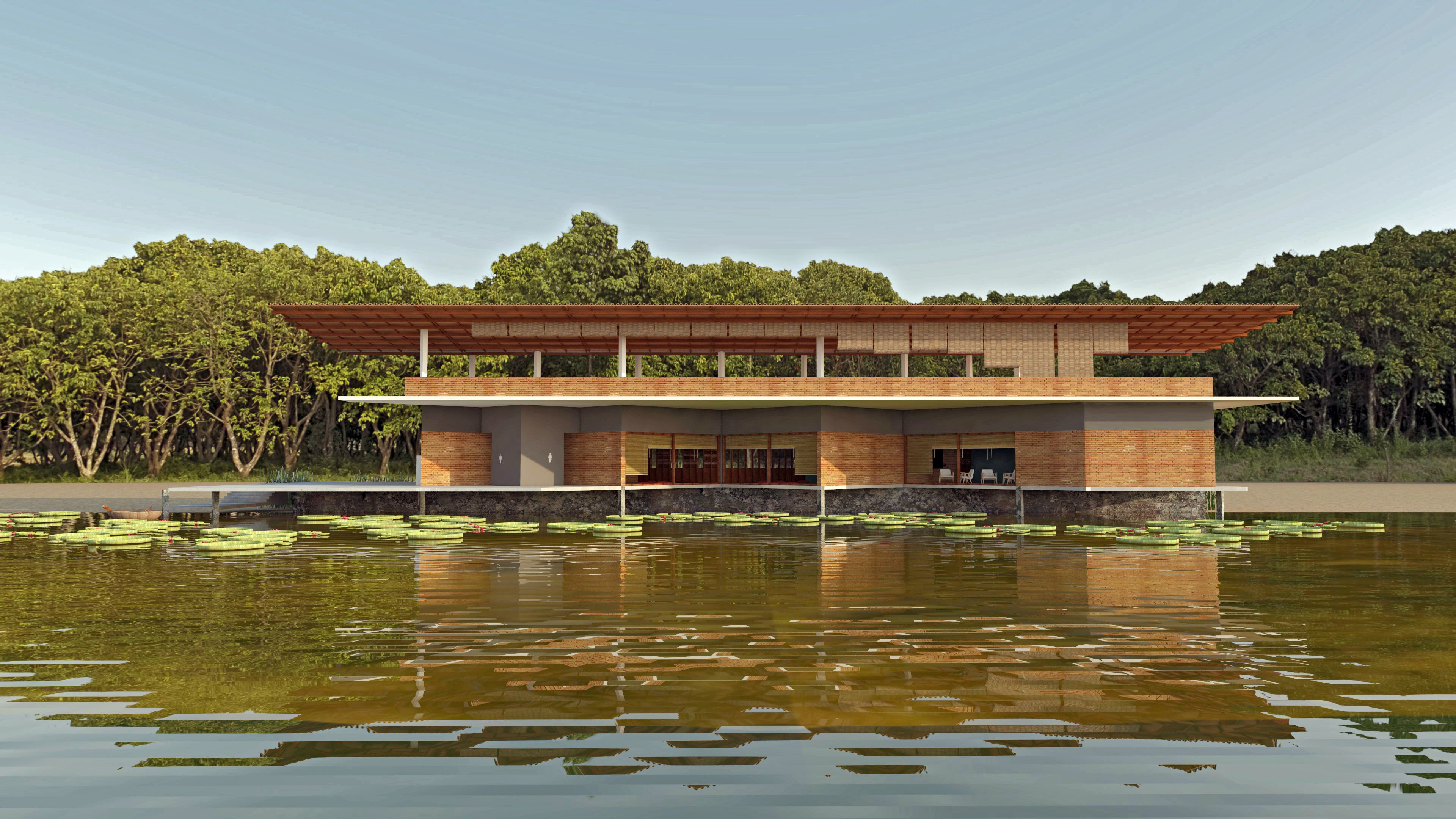
Our proposal is focused on building responsibly and practically, with minimal impact on the environment and maximum flexibility of use. The architecture is a simple structure that is modular in every sense – spatially, structurally and functionally. The intent is to provide an elegant and minimal solution that can be built-to-suit any site condition. It can be built with unskilled labour, standard construction materials and equipment available in any village. Most importantly, the intervention doesn’t fall into the trap of gentrification because it doesn’t presuppose functionality and design for specific patterns of utility. The Resource Center consists simply of three 20ft x 20ft rooms that are well lit, well-ventilated and climate-appropriate. It seeks simply to provide basic infrastructure for needs that can evolve over time.
The building responds to the Wetland on one side and a stepped Rainwater Tank on the other. This tank is accessible to all – people and animals. One edge of this tank is slopes gently towards the center, allowing access for cows and carts. The other edge is articulated with hard stone steps and porous landings. Here also, the intent is to provide basic infrastructure with minimal built-footprint. Proximity to the nearby temple ensures that the space is in the shadow of safety and security.
 Umber
Umber 